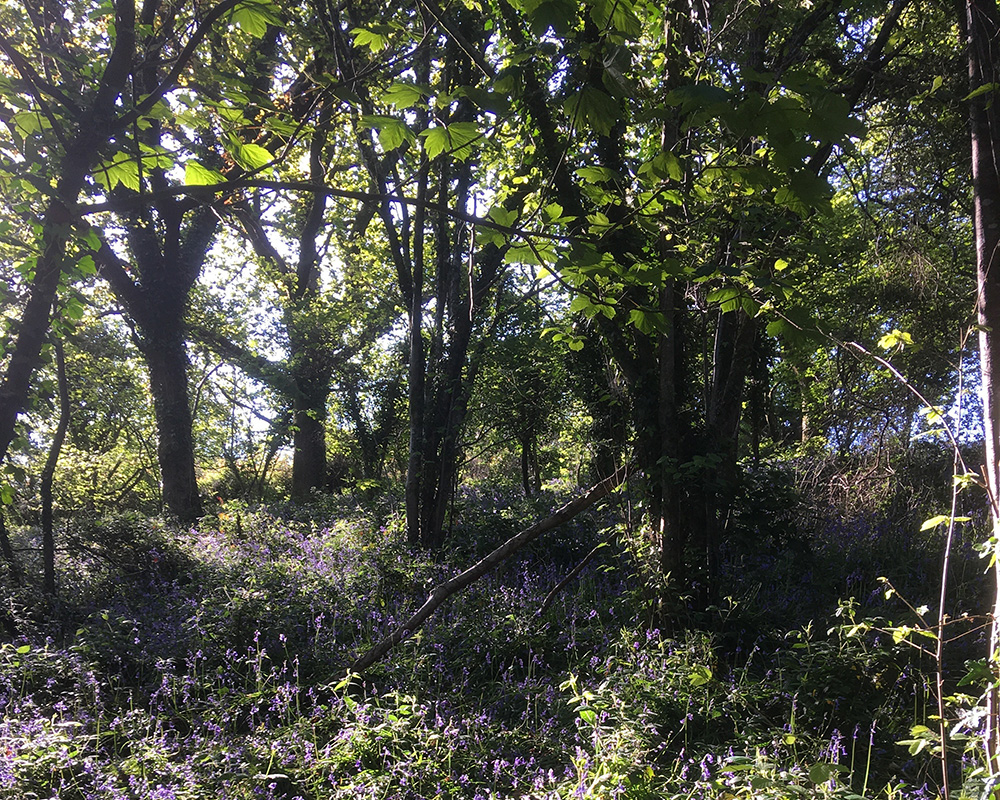
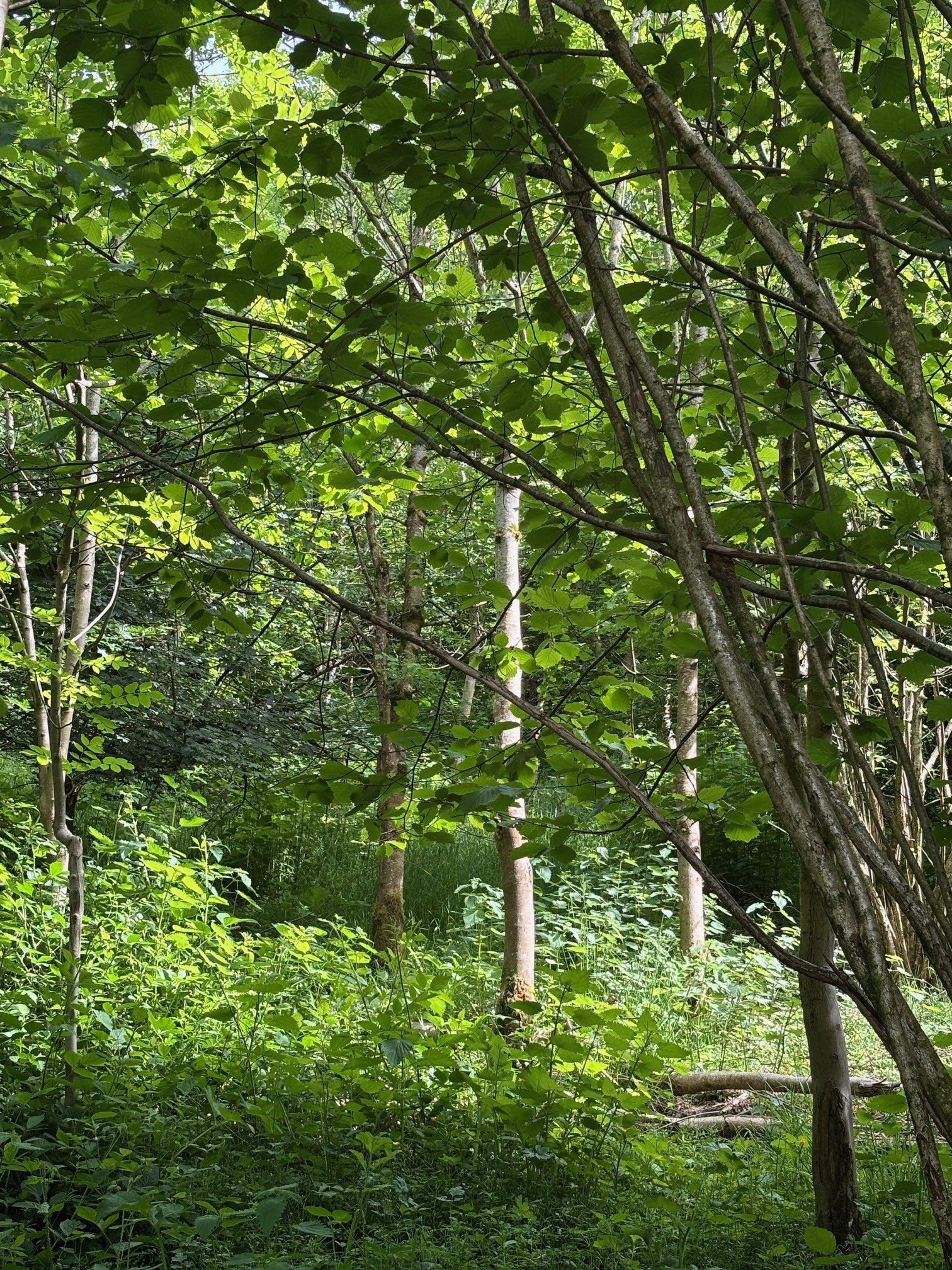
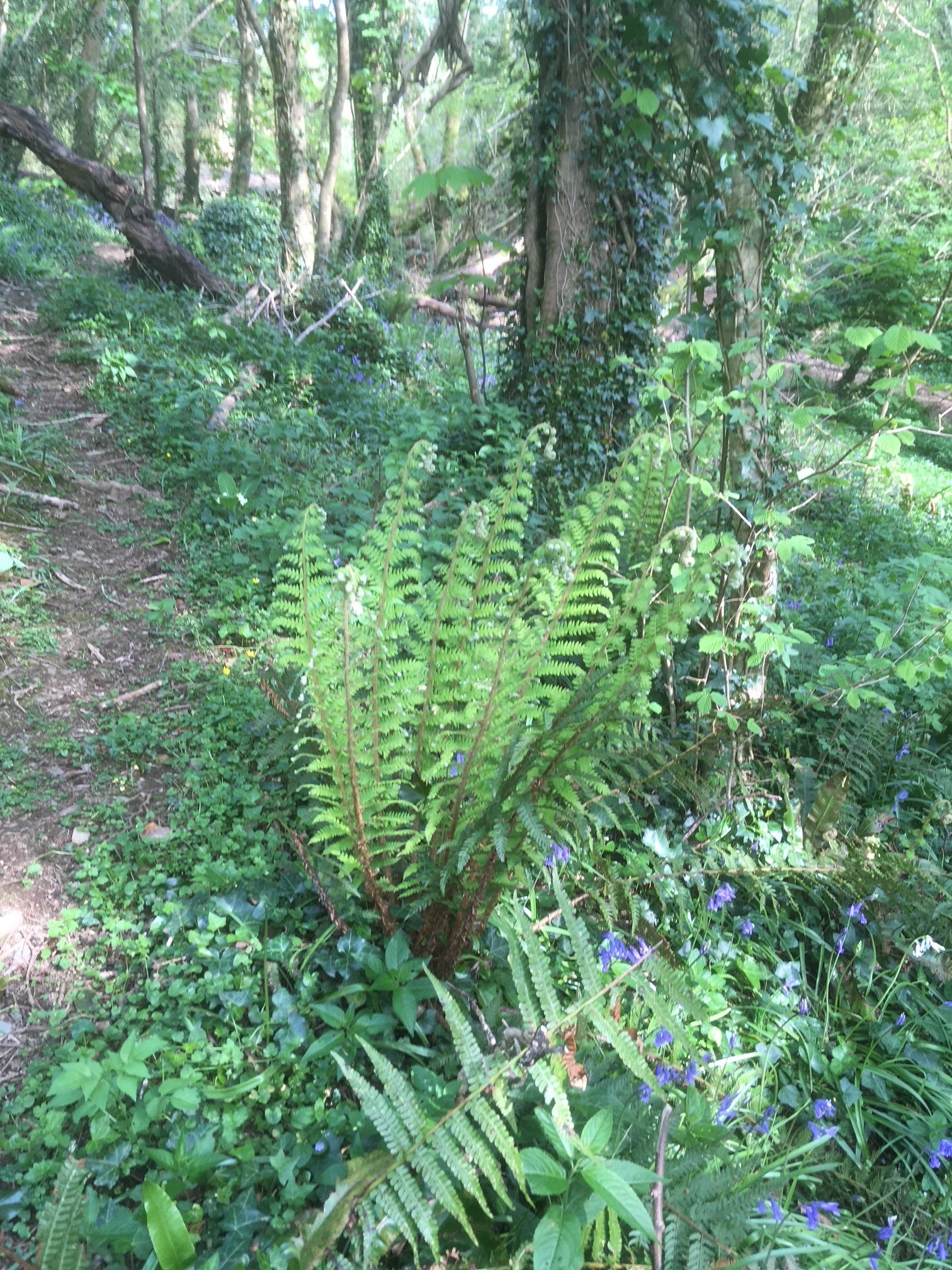
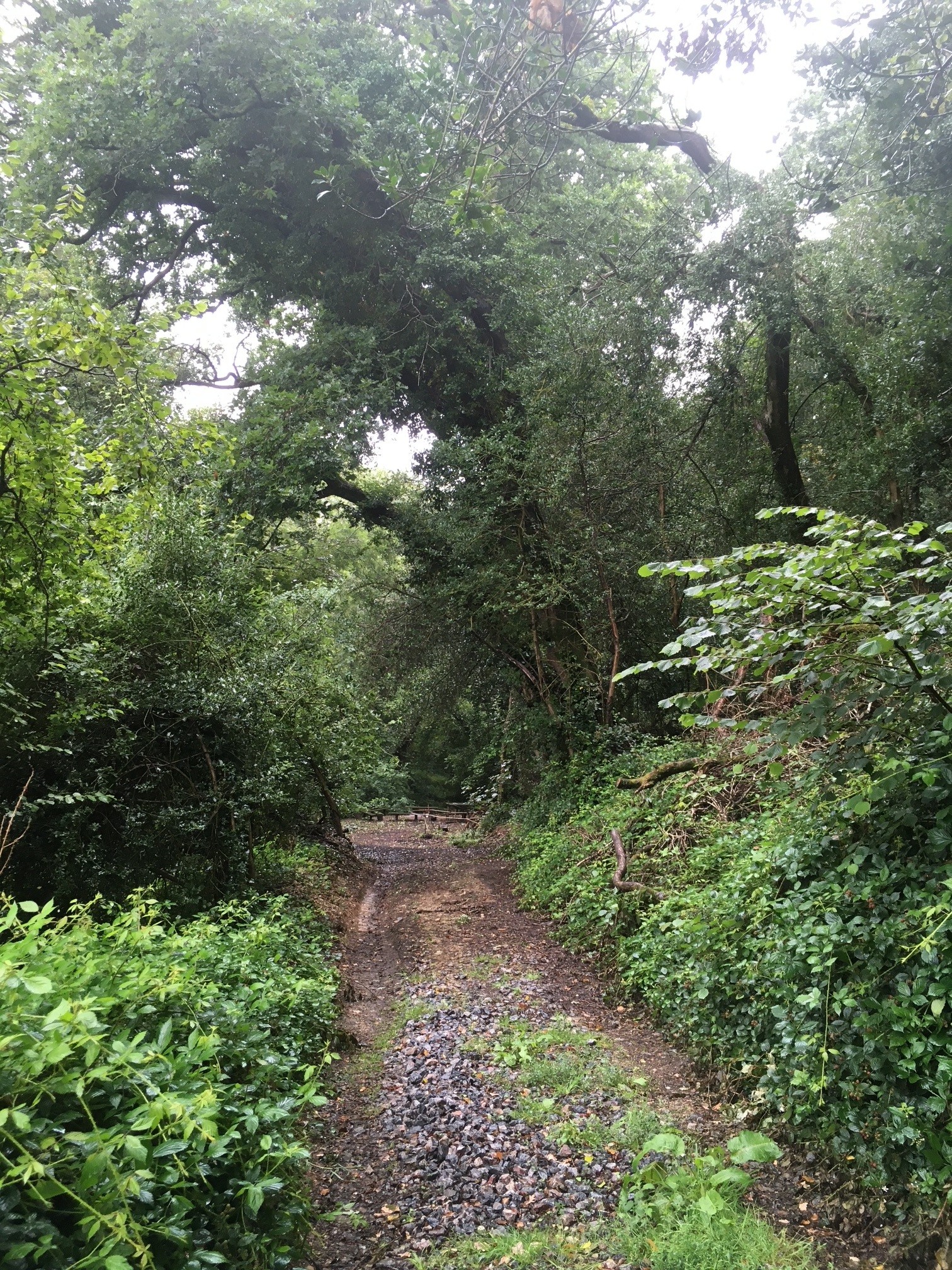
In 2011 an English Woodland Grant through MOOR Woods allowed us to create a new plantation of 3000 trees which were planted in a 5 acre area adjoining the older ancient woodland helping to extending our general wooded area and link wildlife habitats. Trees planted included Ash, Hazel, Pedunculate Oak, Silver Birch, Goat Willow, Field Maple, Holly, Wild Cherry, Hawthorn, Guelder Rose, Elder, Crabapple and Sweet Chestnut.
A further 200 trees of Crabapple, Elder, Silver Birch, Sweet Chestnut, Hazel and Wild Pear were planted in a long corridor between one of our hedgerows and a small stream – these have formed the start of a permaculture woodland garden. We wanted to plant trees in this area that would fruit or produce a nut to create additional support for farm wildlife.
Willow is also planted where we have wet areas, this aids water movement across fields.
Hedges
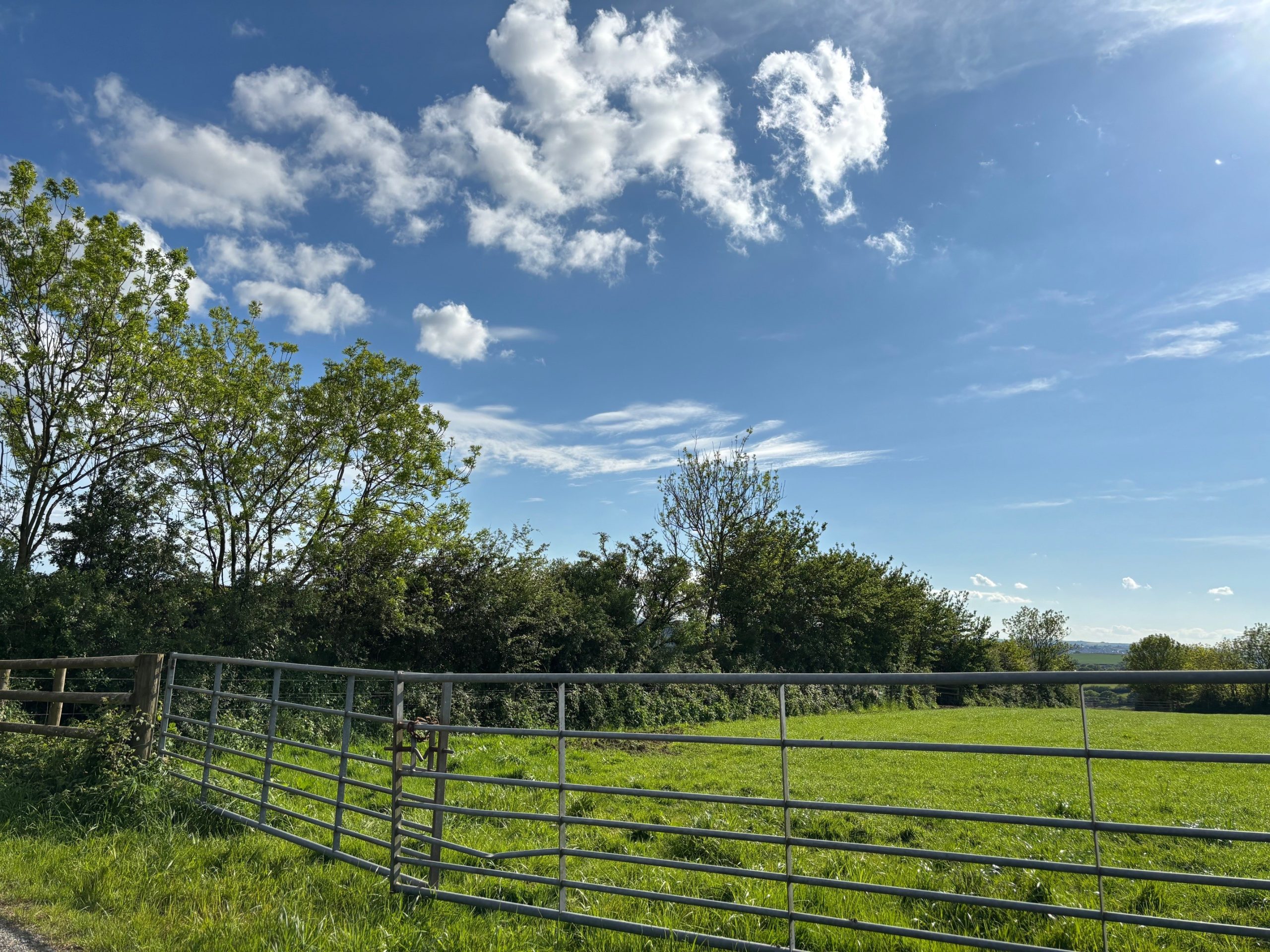
We stopped annually trimming the on farm hedges in 2012. We aim to start laying them with traditional methods soon. Laid hedges create a stock proof barrier and also provide essential wildlife corridors to allow the safe movement of animals.
These dense habitats are great for farmland insects, mammals such as Dormice and hibernating Hedgehogs and nesting birds such as Bullfinches, Tits and Chaffinches. Variation in vegetation on a hedge ensures different habitats are available to different species of wildlife and the different sizes and types of vegetation enables smaller birds to nest in safety as larger birds of prey cannot penetrate the dense areas.
Our hedges are generally taller than most locally and we will leave some of the larger trees to become Hedgerow Trees. These individual trees will become a permanent feature and will store sequestered carbon for as long as they live.
Different species of tree along the hedges will be chosen to become larger trees. As all species have their own individual characteristics – an Oak will grow for 300 years, rest for 300 years before taking another 300 year to decline so it is good to have other types of trees along the same hedge such as quicker growing Hazel.
These taller trees will also capture wind, slowing it down which helps prevent moisture lost and soil erosion. They also provide rain and sun protection for our livestock and with it being 3 degrees warmer in the winter and 3 degrees cooler in the summer under a tree, animals naturally will gravitate towards them. Trees also provide a vast array of additional benefits such as nesting sites for larger birds and bats.